
.png)

Wednesday: The challenges of hospitality

What's behind the restaurant experience: people and business models
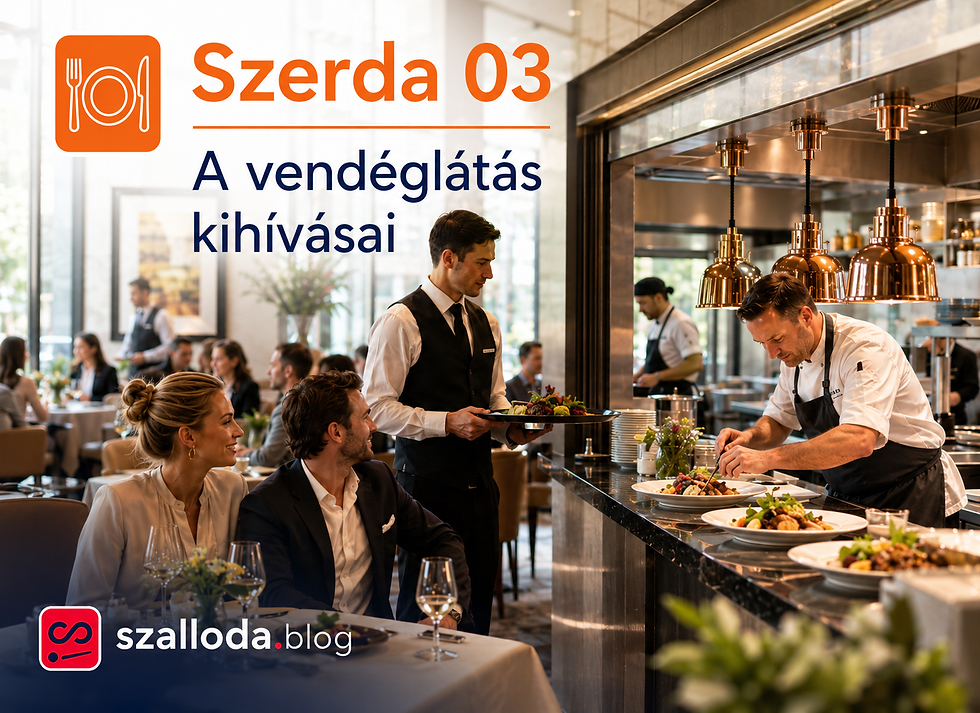
Hospitality is one of the most spectacular areas of tourism. A beautifully presented meal, a good glass of wine, an attentive server, an exciting restaurant space or a memorable dinner can easily become one of the most memorable moments of a trip, something that many guests remember first.
That's why the Challenges of Hospitality got a special day on Szálloda.blog.
Wednesday will be the day of gastronomy, restaurant operations, hotel catering, labor, prices, ingredients, wines, beverages, service quality and sustainability. Hospitality is at the same time a creative profession, creating experiences, daily organization and operation and of course a tough business reality full of challenges, unexpected and unforeseen situations.

To a guest, a restaurant often seems too simple from the outside: menu, kitchen, waiter, guest, bill. However, in reality, behind every successful restaurant there are a lot of decisions, organization, calculations, human performance, and consistent professional work, which are hardly noticeable to those who are not familiar with this world.
These questions are more important today than ever:
What should the concept be?
Who is the target audience?
What can the price handle?
Where does the raw material come from?
How big should the menu be?
What should the wine list be like?
How many people are needed in the kitchen and on the field?
How can you deliver predictable quality even when the house is full?
How can a dinner become an experience and not just a meal?

Hospitality has come under enormous pressure in recent years.
Raw material prices have risen, energy costs have increased, labor has become more expensive, and it has become more difficult to find and retain good professionals. Meanwhile, guest expectations have not decreased, and in many cases have increased. They not only want to simply eat, but also want experiences and unforgettable moments above a certain price category or in certain locations.
Today's guests expect quality, experience, speed, flexibility, good value for money, personalization and authenticity in almost every category, be it fast food, street food, self-service restaurant, buffet or fine dining. In this situation, it is very difficult to strike a good balance.
One of the biggest challenges in hospitality is that the guest sees the experience, while the operator also sees the cost structure behind it. For the guest, a meal is a taste, aroma, sight and atmosphere. For the restaurant, the same food is procurement, loss rate, working hours, technology, storage, serving time, pricing and margin.
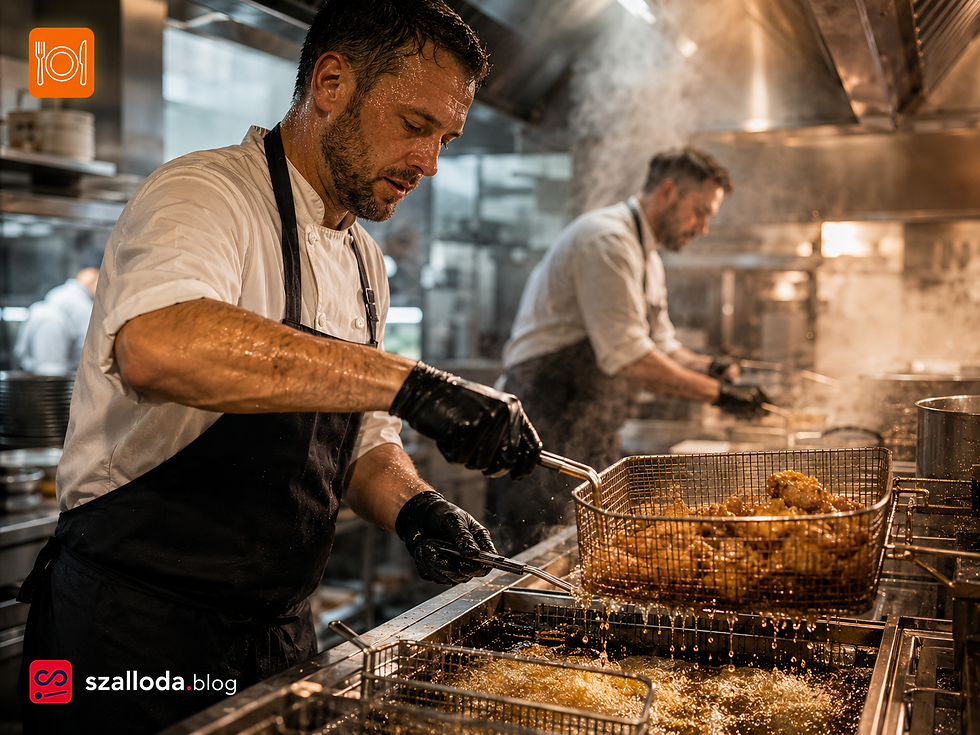
If the food is good but not commercially sustainable, it won't work in the long run. If it's commercially sound but the experience is poor, the guest won't return. If it's too expensive, it can put them off. If it's too cheap, it can eat up operations. If it's too complicated, it puts a strain on the kitchen.
Good hospitality is therefore not only a matter of taste, but also of the right sense of proportion and business.
Wednesday's articles will therefore not only talk about where to eat well or which restaurant has received an award, but also about what makes a restaurant work, how they developed their concept to follow and work? What is the role of hotel F&B today? When does the restaurant strengthen the hotel and when does it become a burden or unnecessary? How can breakfast, bar, banquet, fine dining or casual dining be treated as a real strategic element?
Hotel hospitality is a special planet within the gastronomic universe.
A hotel restaurant is part of the entire guest journey: breakfast affects first impressions, the lobby bar influences the atmosphere of the house, just as room service is part of the comfort level. Banquet and event F&B can directly shape the business result and a truly good restaurant can add a unique appeal to a hotel, if not treated as a gimmick and a frill.

A common mistake in hospitality is to see a restaurant as just a necessary service. You need breakfast, you need dinner, you need a bar, you need event offerings. But if there is no clear concept, target group, pricing policy, staff, quality, and management attention behind it, hospitality can easily become a source of loss, even though, when run well, it can be a powerful brand-building tool.
Gastronomy creates a particularly strong emotional connection. A good dish, a well-chosen wine, a thoughtful gesture or a special local ingredient can be embedded much more deeply in a guest's memory than a standard service element.

Gastrotourism is also important.
The tourist position of a country, a region or a city can be significantly strengthened if it has a recognizable gastronomic history. It is not enough to have good restaurants. The question is whether these are connected to the place, the producers, the wine region, the markets, the local identity and the communication of the destination.

Gastronomy becomes a tourist force when it is not a set of isolated restaurants, but an interpretable system of experiences.
Wednesday's topics will therefore include fine dining and the Michelin world. But not only at the level of awards. The question here will also be: what does all this mean in terms of the positioning of a country, a city, a hotel or a restaurant?
A Michelin star or a strong gastronomic recognition is not only a matter of professional pride. It is also a tourist message and a guarantee of quality assurance. It sends the message that the given place is part of an international quality map. But this is not enough in itself. The question is whether the destination can consciously build on this.
Another big issue in hospitality is the (skilled) workforce.

Good cuisine and good service depend on people: chefs, cooks, pastry chefs, servers, sommeliers, bartenders, restaurant managers, hosts and back-office staff. Performance in hospitality is physically, mentally and emotionally demanding. Long shifts, high pressure, immediate feedback, unpredictable guest situations, constant concentration. The quality of hospitality cannot be separated from working conditions.
A tired, underpaid, poorly managed or burnt out team will not consistently deliver high standards. There may be a good day or a great performance, but consistent quality is only possible with a stable, prepared and respected team.

The guest does not see the labor market problem, they only see that there is a long wait, the service is nervous, there is no attention, the order is wrong, the recommendation is not made and the server cannot answer questions about food and drinks, the food is late, and its temperature is not appropriate because the kitchen is overloaded.
The profession, however, needs to see the reasons.
That's why Wednesday's articles will not only be about food, restaurants, and wine, but also about how to build, train, retain, and lead hospitality teams.

In hospitality, the quality and excellence of management is directly visible and tangible in the rhythm of the course, the relationship between the kitchen and the service, whether the guest is truly being listened to or just served. It is also evident in the team's ability to remain elegant, calm, and attentive under pressure.
Good hospitality is not rigid, but disciplined, precise, not overdone and contrived, but attentive.
Wednesday's topic will therefore also address how the style of hospitality is changing:
What does the guest expect today?
How important is formality?
Where is the line between laziness and unprofessionalism?
Why aren't directness and inattention the same thing?
How can you be modern, friendly and professional at the same time?
The world of wines and beverages will also be an important part of Wednesday.
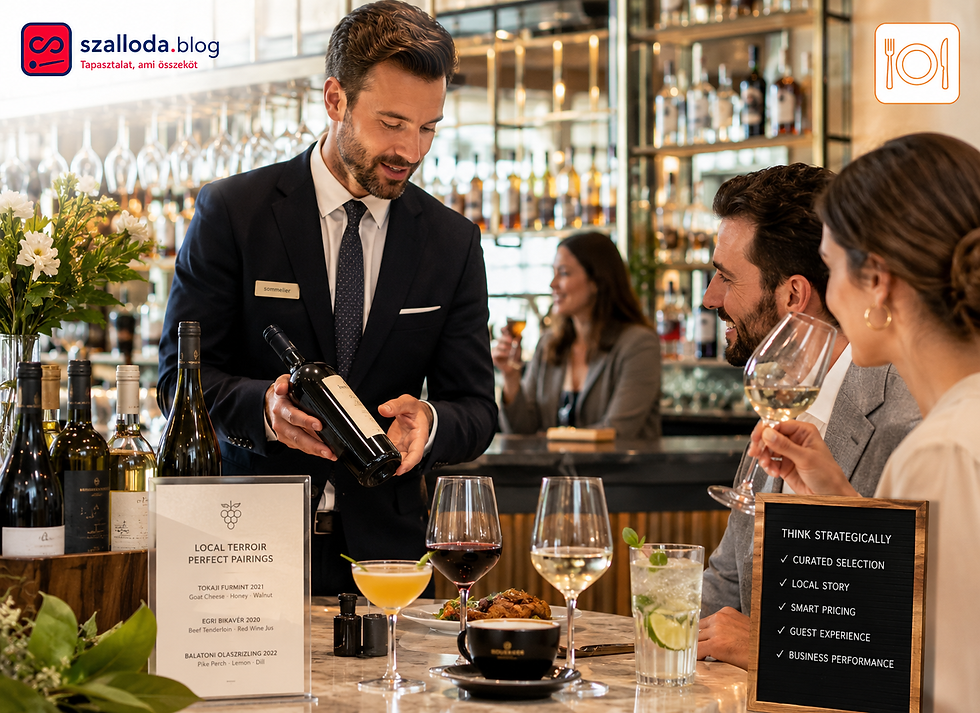
A good wine list, a smart beverage strategy, a well-functioning bar or a creative non-alcoholic offering can add a lot to the guest experience and the business result. Hospitality is no longer just about the food. Drink pairing, local wines, cocktail culture, coffee quality and non-alcoholic alternatives are all part of how contemporary, attentive and marketable a place is.
Hospitality is therefore a profession, an art, and a business at the same time.

If we only interpret it as art, we easily become disconnected from business reality. If we only see it as numbers, we do not provide an experience. If we only treat it as a trend, we remain superficial. If we only view hospitality as a tradition, then it is very easy to fall behind.
Modern, good hospitality can be created by interpreting, adapting, and balancing these.
Wednesday's topics on szalloda.blog will seek to create this balance.
We will talk about restaurants, kitchens, hotel F&B, breakfasts, wines, workforce, prices, concepts, fine dining, gastrotourism and guest experience. But always with the same approach: hospitality should not be understood as an isolated experience, but as a functioning system.

A restaurant, a buffet car, a railway bistro, a village pub or a pastry shop on the outskirts of town is not only the place where we eat, but also the place where a destination, a hotel or a service provider most directly meets the guest's senses.
That's why Wednesday will be Hospitality Challenges Day on szalloda.blog .
Because hospitality is not just frills, the guest remembers their culinary experiences the longest.


Comments