


A Hospitality Internship in Scotland During COVID-19

Safety and Luxury in the Scottish Highlands During a Pandemic: A Hospitality Internship in the Time of COVID-19.

Around an hour and a half by car from Inverness, amid the mountains along Scotland's scenic route, stands one of the country's most distinctive hotels: The Torridon. Despite the unprecedented blow inflicted on the hotel industry by coronavirus, the property has operated at more than 90% occupancy since reopening. How can a former hunting lodge continue to deliver five-star quality despite the restrictions?
When the 500-mile North Coast 500 scenic route was launched in Scotland in 2015, with the encouragement of Prince Charles, The Torridon became a favourite stopping point. More than 15,000 guests visit the 31-room hotel annually. Travellers from the British Isles and across the world make the scenic journey by car, motorcycle or bicycle. Before COVID-19, around four-fifths of the hotel's guests were British, while a fifth came from the United States, Asia and Europe. Travel restrictions made international arrivals almost impossible, forcing the hotel to adapt.

After closing its doors on 23 March, management decided to rethink the property's entire identity. This resulted in renewed marketing communications as well as refreshed restaurant and room concepts.
Beyond being a popular stop on the NC500, the hotel offers a wealth of activities for people seeking to escape everyday life. BBC's Amazing Hotels: Life Beyond the Lobby dedicated an episode to The Torridon, broadcast on 21 July, barely a week after the reopening. Thanks to a coordinated marketing campaign, almost every room was sold for the remainder of the year.

What makes the hotel exceptional is its rare ability to combine luxury with genuine adventure. Guests can admire the surrounding mountains or explore them with a qualified guide. The Torridon Outdoors team organises kayaking, cycling, hiking and mountaineering activities, not only for guests but also for staff. After an active day, visitors can choose from 365 whiskies and 120 gins in the hotel's whisky bar.
At the time of writing, restrictions prohibited indoor alcohol consumption. Management therefore created outdoor firepit areas with surrounding benches so guests could continue enjoying the hotel's impressive selection of drinks.

Another highlight is the hotel's 1887 restaurant, which offers fine dining to its guests. The telescope nearby is perfect for stargazing. Far from the light pollution of major cities, thousands of stars can be seen within a few minutes' walk. One of the hotel's most distinctive offers combines dinner with an expertly guided evening exploring the night sky.

To ensure guests' safety, management introduced a range of precautions: arrivals checked in at a single reception desk rather than two; lifts could be shared only by members of the same household; everyone, including guests and employees, had to wear masks indoors; hand-sanitising stations were provided throughout the building; restaurant tables were spaced safely apart; and non-resident diners had to complete a form to support contact tracing.

The remote location, an hour and a half from the nearest city, inspired the owners to produce as much as possible themselves. They established a one-hectare garden growing vegetables and herbs for the kitchen, along with a gin garden whose botanicals are used in the hotel's own gin. The estate also has a farm raising pigs and Highland cattle. Clear water from the surrounding mountains provides the hotel's year-round water supply. Smart technologies help optimise energy use, while a 350 kW biomass boiler fuelled by sawdust heats water.
Alongside its natural setting, quality and ownership, the hotel's fourth and perhaps most important core value is its people. As a hospitality student seeking an internship during COVID-19, I faced an enormous challenge: finding a placement in one of the industries hit hardest by the pandemic.
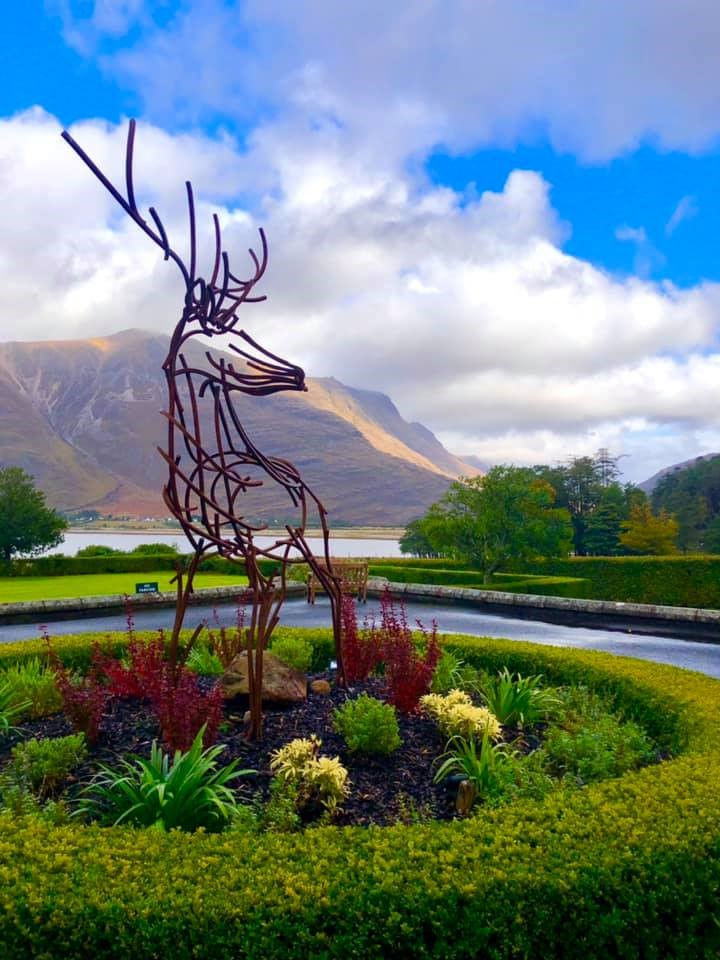
Although an internship in Hungary would have been the safest choice, none of the hotels where I applied took my candidacy beyond an interview. I decided to try Scotland, where I had gained experience the previous year. By chance I came across an opening at The Torridon and, after a Skype interview, was able to book my flight. Throughout recruitment, both the human resources and restaurant managers supported me, even sending a detailed training and internship plan in advance. The restaurant manager meets me weekly to give personal advice and feedback, something I had never experienced in previous jobs. After my first month, I was even able to discuss my performance and ambitions directly with the owner, who asked how he could help me achieve my goals.
January and the end of my internship are still some way off, but I have already learned a tremendous amount. I have not regretted taking the risk of working abroad for a single day. Every day gives me a close look at how a five-star hotel can operate safely during a global pandemic.

About the author:
Zsolt Oláh realised during secondary school that his future lay in restaurants and hospitality. During his last eighteen months at school he prepared and sold food to acquaintances every day, rising at three in the morning and pursuing the work with passion alongside his studies. For his business studies final project, he developed a business plan for a Mexican restaurant. As a student of Corvinus University, he spent a semester in 2020 at Tecnológico de Monterrey in Mexico, becoming familiar with the country's culture and gastronomy.
This article was translated from the original Hungarian using artificial intelligence. The original language is Hungarian.


Comments