


Hello, Domestic Tourism! Does Your Hotel Have a Sales Strategy?

Good morning, Hungary! Good morning, Budapest! Wake up!

If Hungarian travellers spend even a fraction of the money at home this year that they spent abroad last year on accommodation, meals and transport, domestic hotels and restaurants could still finish the year remarkably well.
The government has substantially increased the allowance available through Hungary's SZÉP card, yet many companies are not taking advantage of it and accountants are not encouraging owners either. With some restructuring of pay, even temporarily, there could be major benefits. But first employers need to understand which SZÉP-card subaccount can be used where and how the additional amounts can be spent sensibly.

We need a campaign: one from the government, one from the professional associations, another from hotels, with restaurants joining in. They could even cooperate, as public authorities, businesses and associations do in Austria and Croatia.

Consider my own case. We wanted to travel to Szeged in the next few days. I tried to book directly with a hotel, helping the property by avoiding intermediaries and theoretically leaving it with 10–30% more revenue from my stay.
- First disappointment: hardly any hotels are open at all.
- Second disappointment: hotel sales teams have not changed their thinking and remain trapped by domestic and international booking portals. These platforms regularly offer much better prices than direct bookings. Why should the rates not at least be identical?
- Third disappointment: distorted ideas about value among revenue managers. Some properties that would barely justify HUF 15,000 ask HUF 60,000 even after a supposed discount, seemingly exploiting the circumstances. Others that might be worth HUF 25,000 offer rooms for HUF 16,000.
Uncertainty is palpable. Even more striking is the lack of genuine packages or cross-selling, and the failure of neighbouring service providers to work together.

Wake up! Despite our good intentions, we booked through the platform beginning with B because we are not obliged to work against our own interests. We will spend the difference between its cheaper price and the direct rate on a good dinner instead.

Here is the arithmetic. A hotel charges X for a direct booking. On the platform beginning with B, its price is X less 20%. The platform then receives commission of 12% to as much as 30%. The hotel loses at least 30%. Why not give direct bookers a good themed dinner at a nearby restaurant as a cross-selling benefit? The booking platform would lose, while the winners would be the guest, a hotel retaining more income and a restaurant gaining customers who might return.
I cannot understand what these sales and revenue acrobats practised during the months of home-office work and online training.
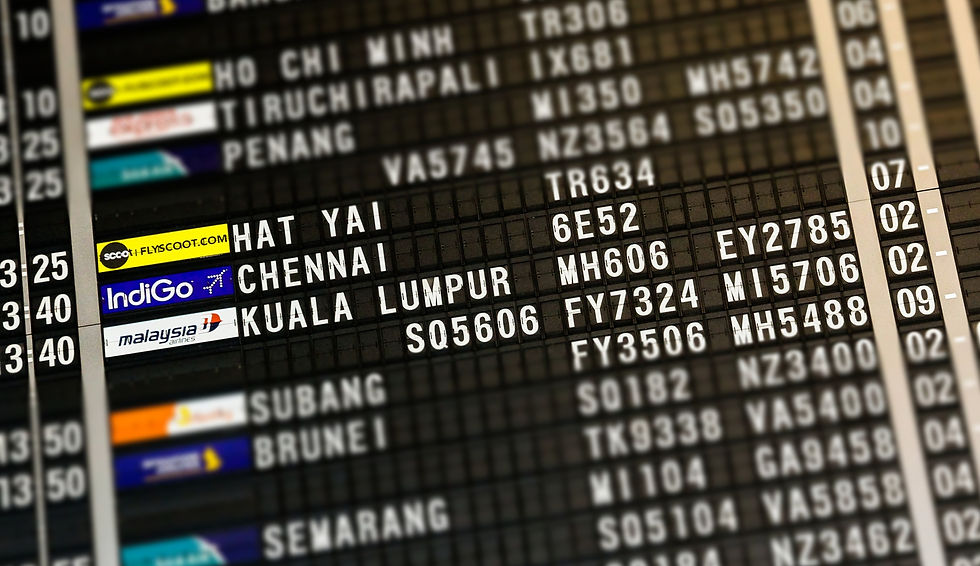
Almost no hotels are open in Budapest. Many still seem to be staring at last year's arrivals board at Budapest Airport. It is bizarre that some continue spending money on inbound tourism campaigns whose near-term outcome is entirely predictable.

Has anyone seen a Budapest hotel warmly inviting travellers from rural Hungary? Who has tried an initiative like Vienna's Hotel Sacher, converting guest rooms into private dining rooms to save its restaurants and attract local customers?
In Vienna, the municipality invites residents into local restaurants, while restaurateurs reach out with discounts, promotions and coordinated communication. Are we watching and learning from the experimental laboratory next door?

Rural hotels call for help because they do not know how to reach well-paying foreign groups. Some are not even familiar with entry restrictions, let alone the changed market. Large international groups will not return soon, and foreign demand will be lower. British stag-party groups will certainly not be arriving in large numbers.
It would be more useful to look at the current arrivals board at Budapest Airport and draw conclusions about actual demand.

Even rural hotels where 70–80% of guests are Hungarian complain that domestic travellers are cheap. They do not understand that their own hotels have become cheap because they lack a pricing strategy and depend on coupons and online booking platforms.

Hungarian guests are valuable when they have interesting things to do, worthwhile experiences to buy and quality services comparable with those they previously enjoyed abroad. Many people who flew to resorts or spent long weekends in good hotels overseas would gladly stay in Hungary if they were not deterred by London- or Moscow-level prices or suspiciously poor accommodation and dining.
So wake up. It is time to rethink everything, starting with Budapest.

About the author:
Tamás Pakuts has worked actively in aviation and tourism for almost 35 years, and in hotels and hospitality for almost 20 years.
As a manager and consultant, he has gained insight into airlines, hotels, hotel groups and cruise companies, contributing to operations, crisis management and development.
Today he and his colleagues work internationally as experts, advisers and trainers in hospitality and aviation, developing projects of international interest.
This article was translated from the original Hungarian using artificial intelligence. The original language is Hungarian.


Comments