


Amsterdam's Dilemma: Can a City Choose Its Tourists?


If we believe coronavirus acted as a purifying fire, preserving stronger providers in tourism, as architect Ádám Singer argued in his article on the hotel industry's crisis, then we might say the Dutch would like to use that same fire to retain higher-quality tourists.
Coronavirus kept visitors away from Amsterdam, as from other European capitals. For months the Dutch capital looked like a ghost town. Terraces along the canals, normally filled with visitors from around the world, served only a handful of locals. Dutch residents reclaimed their city, while domestic tourism supported the economy and allowed people to explore their own capital in peace. The accompanying video illustrates this extraordinary period.

The pandemic hit Amsterdam tourism severely. Businesses in the red-light district reportedly lost around 90% of their income, while hotel occupancy fell from 81% in March 2019 to 41% in March 2020.
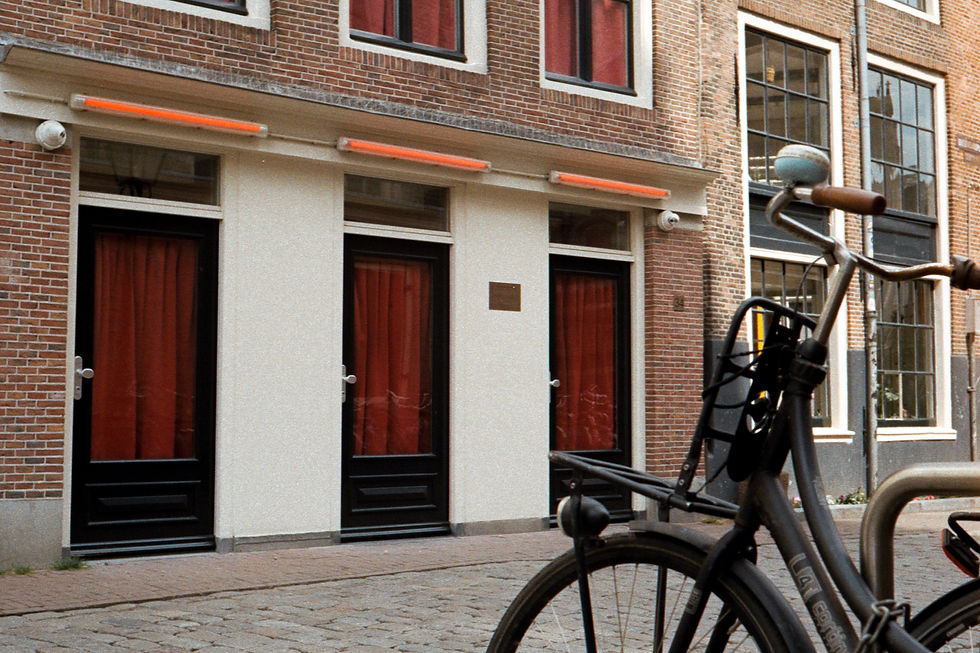
Such an absence of visitors was extraordinary for a city whose tourism had grown relentlessly for a decade. Amsterdam received around 20 million visitors in 2019 against a population of almost 863,000. Overtourism had become irritating and disruptive for residents, even while local shops and tourism businesses profited.

Amsterdam's residents increasingly felt like strangers in their own city. Congested streets made even cycling and walking difficult. Over the preceding two years, the city council had introduced strict measures, including a €3 per-person nightly tourist levy on top of a 7% room tax. From 1 April, guided group tours were banned in the red-light district.

New souvenir shops selling items such as wooden tulips would no longer receive permits. From 1 July, holiday rentals were also banned in three districts, including the red-light district, as part of an effort to restore neighbourhoods.
Although visitor numbers reached unprecedented lows during the first stage of the pandemic, tourists returned to Amsterdam earlier than to many other European capitals. Reasons included the Netherlands' so-called intelligent lockdown, its location as an attractive seaside option for German visitors, and its established reputation as a party destination.
Municipal officials tried to use the absence of tourists to develop a more sustainable tourism strategy, but visitors returned sooner than almost anyone expected.

Even before the pandemic, the city had been devising a strategy to attract visitors who would not damage its liveability and would respect residents' needs. Measures included environmentally friendly transport, better waste management, crowd-management systems and monitoring of busy areas.
At national level, the Netherlands Board of Tourism and Conventions had already adopted a goal in 2018 of diverting visitors away from an overcrowded Amsterdam towards lesser-known but equally beautiful Dutch regions. The strategy was described in its Perspective 2030 report.

Coronavirus changed many things, but it did not change the authorities' underlying priority for tourism: attracting what they call quality visitors.
Who are these quality tourists? Amsterdam's policymakers tend to mean visitors who contribute constructively, spending time in museums and cultural attractions rather than coming primarily to party, use cannabis or buy sex.

Yet the idea of selecting tourists is controversial. Amsterdam's liberal attitude is undeniably part of its charm, along with the messy realities that accompany it. Turning the city into an elitist destination exclusively for museum visitors risks destroying what makes it itself. Such policies could harm not only the city's character but also local businesses and tourism.
Amsterdam's relationship with tourists is therefore complicated at every level. Hotel owners may be weary of crowded events yet still depend on the revenue. Authorities can also overlook the very considerable economic contribution of tourism, estimated in the article at almost €82 billion annually. While residents welcomed the quieter streets, the loss of visitor spending contributed to a reported 12% increase in unemployment among those previously employed in hotels, restaurants and catering.

Who returned first? On paper, the policy of attracting quality visitors sounds appealing, but reality can prove very different. By mid-July, authorities had to close streets in the red-light district because crowding prevented people from maintaining 1.5 metres of distance. According to STR, Amsterdam's hotel occupancy was comparatively strong among European capitals, probably helped by hotels and restaurants cutting prices sharply — hardly a recipe for attracting only higher-spending, supposedly quality tourists.

What does this mean for hotels and restaurants? Operators in Amsterdam already face a difficult task finding the right customers amid substantial regulatory constraints and ever greater competition. The city has made opening new hotels and restaurants much harder since 2016, yet competition remains intense as everyone seeks a share of the market.

About the author:
Dr Anna Móczár graduated in law from ELTE University in Budapest before earning a bachelor's degree in Business Administration at Hotelschool The Hague in Amsterdam. Her internships included The Merrion hotel in Dublin and the Hilton Amsterdam.
After her studies, she briefly taught at Hotelschool The Hague before continuing her career at Soho House Berlin, the British-origin membership club and hotel.
In 2019 she returned to Amsterdam as Revenue Coordinator for Yays, a boutique serviced-apartment chain, and Short Stay Group, working on yield management for nearly 500 apartments in Amsterdam, Barcelona and Paris.
This article was translated from the original Hungarian using artificial intelligence. The original language is Hungarian.


Comments