


How COVID-19 Devastated Aviation in 2020: Bankruptcies and Restructuring


After the extraordinarily dynamic expansion of aviation in 2019 and earlier years, 2020 might have produced yet more industry records.

Instead, aviation broke records of an entirely different kind, many of them commercially catastrophic:
Airports standing idle
Unused aviation capacity
Grounded aircraft
Cancelled flights and reduced schedules
Pilots, cabin crew and ground staff losing their jobs
Airlines and ground-handling companies going bankrupt

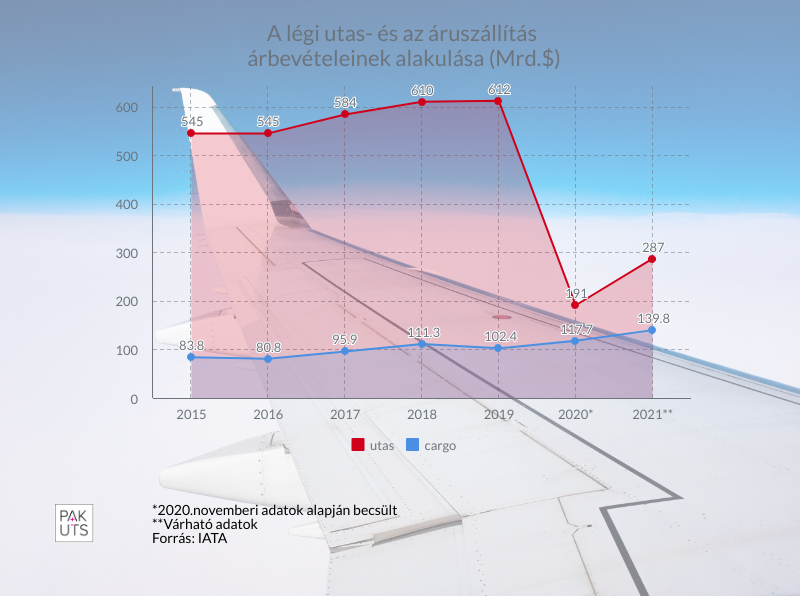
The only clear winner, with the potential to set positive records, was air cargo. It reversed the decline seen in 2019 and previous years. Demand for freight capacity increased as a result of COVID-19 and revenues multiplied as prices surged, even though the number of dedicated cargo flights did not rise significantly.

Some airlines focused on passenger transport also improved their position by using suitable aircraft for cargo. Wizz Air provides a Hungarian example: during the first pandemic wave, it carried medical equipment and supplies from China in aircraft cargo holds and passenger cabins. This allowed the carrier to sell unused capacity at market rates and retain some jobs. As the Hungarian government was usually the customer, payments for actual transport services at market rates did not constitute unlawful state aid, avoiding the difficulties previously seen in the Malév case.
Aircraft manufacturers and conversion facilities experienced growing demand from operators seeking to turn passenger aircraft into freighters. Quick-change (QC) models, which can rapidly switch between passenger and cargo layouts, became more valuable. Such variants had been produced mainly in the 1990s for a limited number of aircraft types, including Boeing 737-300 and 737-700 aircraft and the Saab 340.
Data published by IATA and ICAO suggest that cargo operators were not in the same danger as passenger airlines. Yet despite increased demand for freight and special flights, there was little major expansion in offered capacity. Passenger aviation, by contrast, was clearly destabilised.
Restrictions imposed from the end of the first quarter and beginning of the second quarter of 2020 pushed airlines already suffering liquidity problems into failure within weeks. Early examples included Air Italy, which had pursued a sometimes confusing domestic and international route strategy as Qatar Airways' Italian affiliate, carrying forward problems from its Meridiana heritage. Italy's Ernest Airways followed. Turkey's AtlasGlobal ceased operations early in 2020 despite an attempted revival in 2019.
It became clear that even public service obligation contracts — government-backed services on otherwise uneconomic routes — could not always guarantee survival. The British airline Flybe, which once served the Southend–Budapest route using Embraer aircraft leased from Stobart Air, also ceased operations.
Operators of the Sukhoi Superjet outside the former Soviet sphere faced trouble too. CityJet's Finnish and Swedish subsidiaries failed, while Mexico's Interjet struggled with insolvency throughout the year.
Several large groups shifted liabilities into subsidiaries and allowed those companies to disappear. Cathay Pacific closed Cathay Dragon in Hong Kong; AirAsia's Japanese operation ceased; LATAM abandoned its Argentine subsidiary; and the Turkish Airlines–Lufthansa joint venture SunExpress wound down SunExpress Deutschland.
The German market also faltered. The planned Condor–LOT transaction collapsed, Lufthansa's Germanwings ceased operations and its former customer, Eurowings, partly assumed the routes. German Airways, formerly Luftfahrtgesellschaft Walter, lost ACMI contracts and entered liquidation.
Level Europe, the Austrian-registered Vueling affiliate within IAG, ceased flying, as did Slovakia's ACMI and charter operator Go2Sky. Montenegro Airlines operated its final flights around Christmas, leaving the small Adriatic state facing the prospect of having no national airline.
South African Airways, once an international carrier with an extensive African network, and its regional partner South African Express also suffered severe disruption and the loss of their former operations.
Other carriers listed among those ending operations in 2020 included Chile's One Airlines, Canada's Island Express Air, Ravn Alaska and Miami Air International in the United States, Trans States Airlines and Compass Airlines from the same group, and Sweden's BRA Braathens Regional Airlines.
More than forty significant air carriers disappeared during 2020, while numerous helicopter and smaller-aircraft operators also relinquished their operating certificates.
The causes of failure included:
Falling passenger traffic
Lost revenue
Liquidity problems
Prohibitions and restrictions
Flawed strategies
In the coming days, we will analyse the aviation crisis through its numbers and examine tourism, cruising and the hotel industry as well.

About the author:
Aviation has been part of my life for almost 35 years. As a manager and consultant, I have worked with numerous airlines and contributed to changes in bilateral agreements governing the designation of carriers.
In the mid-1990s, I helped found an early Central and Eastern European virtual airline specialising in unusual transport requirements. I studied international aviation law in Leipzig and gained my Airline Management qualification in Geneva.
This article was translated from the original Hungarian using artificial intelligence. The original language is Hungarian.


Comments