
.png)

Unique places, regional flavors, shared spirit

Updated: Aug 4
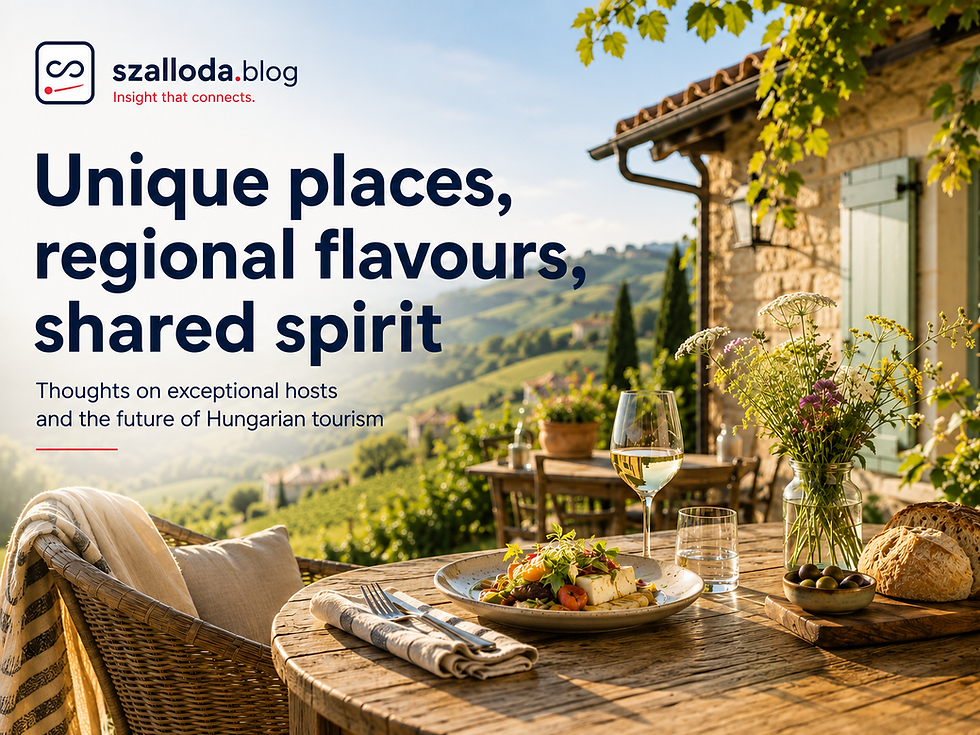
Singular Places connects exceptional hosts, personal ideas and sustainable initiatives – in an international network that can also be an example for Hungarian tourism and rural development.
In the articles published by Szalloda.blog in recent months, we have come to essentially the same conclusion on several seemingly distant topics. The hotel, the restaurant, the winery, the producer, the cultural attraction, the transportation and the landscape do not in themselves constitute a tourism product, because the real competitive advantage is created by the way these separate elements are connected to each other and how they become a jointly usable, understandable and bookable experience for the guest.
In the article entitled Not More Tourists, But More Value, which analyses the Slovenian tourism strategy, we examined how tourism performance can be measured not only in terms of the number of guest nights, but also in terms of the economic, social and environmental value that remains in the place. In the article entitled The Michelin Star Does Not Pay the Bills , we discussed how even an internationally renowned rural restaurant cannot create sustainable demand on its own if it is not backed by adequate accommodation, transport, a production background, a cultural programme and professional destination management. In relation to the Swiss model, we showed that mountains and lakes are excellent assets, but the competitive advantage is provided by the system .

Singular Places is a particularly interesting initiative because it does not formulate all this solely as a strategic goal or a tourism slogan, but tries to turn it into a working business and community model. It connects special hosts, accommodations, restaurants, wineries, producers, local experts, cultural experiences and community initiatives in a way that none of the actors have to give up their own personality, history or operational freedom.

Not just another accommodation booking site
At first glance, Singular Places may seem like a booking platform for unique, independent accommodations and experiences, but the network is much broader than that. The offering is organized around the concepts of Stay, Taste and Discover, meaning accommodation, gastronomy and discovery, so in addition to hotels, guesthouses, lodges and retreat centers, there are also restaurants, wineries, distilleries, farms, local guides, conservation programs and cultural initiatives.
The guest is therefore not only shown where to stay, but also what regional flavours he can taste, who he can meet, what he can discover in the area, and how he can get closer to the cultural, social or natural environment in which the given business operates. In this system, the accommodation is not a terminal or a closed service island, but an entry point to an entire region, the value of which is equally determined by the surrounding restaurants, wineries, producers, craftsmen, tour guides and cultural actors.
The first reaction of a hotel manager may of course be why send a guest to an external restaurant when he can sell the dinner himself. However, in the longer term, it is precisely the diverse and reliable regional offer that may justify the guest spending not one, but three or four nights in the area, booking more programs, spending a higher amount, and returning later. A successful accommodation does not become weaker because it operates in a strong environment, but rather because it is able to add content to the guest's trip beyond itself.
Lars von der Wettern's story is also personal to me

I know the founder of Singular Places, Lars von der Wettern, personally and have long admired his work. We met in the Caucasus, Baku and Tbilisi, where we worked on different projects, we got along well together, easily finding common ground both professionally and personally.
Lars himself came from the world of large hotel companies and corporate careers, but he increasingly felt that the number of guests who were not necessarily looking for a hotel that was oversized in terms of size, service offerings and appearance was increasing. For many guests, personalization, a unique idea, the presence of the host, a real connection to the place and the feeling that they were not buying a product built according to brand standards that could be reproduced anywhere became more important.
According to the official introduction of Singular Places, Lars has been working as a consultant for independent accommodations and hosts for over twenty years, and the initiative has grown from a small community of clients, friends, professional partners and technology providers to an international network. The official website names him as the sole founder, while regional ambassadors, local hosts and professionals from various tourism fields participate in the operation.
What I find particularly authentic about Lars' work is that he does not deny the operational knowledge of large hotel systems, but he also does not want to impose it on smaller, independent houses. Professional sales, technology, financial discipline, quality assurance and consistent operation are of course important, but they cannot come before the personality of the host, the original idea and the spirit of the place.
Uniqueness doesn't consist of a few local decorations
In tourism, terms like “authentic,” “boutique,” “local,” and “sustainable” have become somewhat of a marketing buzzword in recent years. But a property doesn’t become local just by putting some exposed brick behind the reception desk, putting a few old farm tools on the wall, putting a bunch of lavender on the bed, and serving a single local jam at breakfast.
Uniqueness is much more deeply connected to the owner or host’s mindset, the design of the building, the materials used, the supplier relationships, the food, the staff and the cultural environment in which the business operates. Therefore, in addition to energy and water conservation, reducing plastic use and waste, and ecological design, the use of local suppliers, promoting local businesses, selling local products, showcasing cultural heritage, fair employment, providing transport information and supporting community development are among the selection principles of Singular Places.
It is particularly important that the network does not want to subject all its members to the same design, service manual or international certification standard. They are not looking for flawless businesses that already have all the certificates, but also want to support hosts who have actually started to operate more sustainably, are willing to learn and undertake continuous improvement.
The special design in this system is not necessarily expensive or ostentatious, but rather thoughtful, adaptable to the location, respectful of existing architectural and natural values, and environmentally responsible where possible, while not sacrificing comfort, good design, or even luxury. This is one of the important messages of Singular Places: sustainability does not necessarily mean giving up on the guest experience, aesthetics, or high service standards.

Community of special hosts
One of the most important pillars of Singular Places is not the building itself, but the host. The network is looking for individuals who have a clear vision of what kind of place they want to create, what they want to show from their region, how they want to welcome guests, and what kind of relationship they want to establish with other businesses operating in their area.
The platform not only places these actors next to each other, but also tries to form local clusters around them. Each member is asked to recommend at least one external restaurant, a winery, brewery or similar producer, a farm, and one additional small business – such as a craftsman, gallery, shop or local tour guide – to the community, and to connect with local civic or community projects if possible.
This collaboration is not only a nice idea, but also makes economic sense. If the guest also visits a restaurant, winery, farm, craft workshop or guided program in addition to the accommodation, then tourism spending is distributed among more local businesses, generating income for more families and employees, and there is less risk that the value created in the destination is concentrated in a few large service providers or international intermediaries.
This is reflected in the Singular Places model on a financial level. The company directs 20 percent of its commission back to the region where the booking was made: one part supports the work of the local brand ambassador and regional cooperation, and the other part goes to a local nonprofit organization selected by the cluster members. According to the platform, this means that more than 86 percent of the guest's spending stays directly in the region.
Where are these places located?
The geographical distribution of the network is quite diverse, but not uniform. In Europe, there are members in Spain, Portugal, Slovenia, Croatia, Malta, Greece, Germany and Romania, among others; in Africa, there are locations in South Africa, Uganda, Tanzania, Botswana and Mozambique; and in Asia, India, Sri Lanka, Bhutan, Nepal, Cambodia and Vietnam are also represented. From Latin America, there are providers from Uruguay, Chile, Peru, Ecuador and Nicaragua.
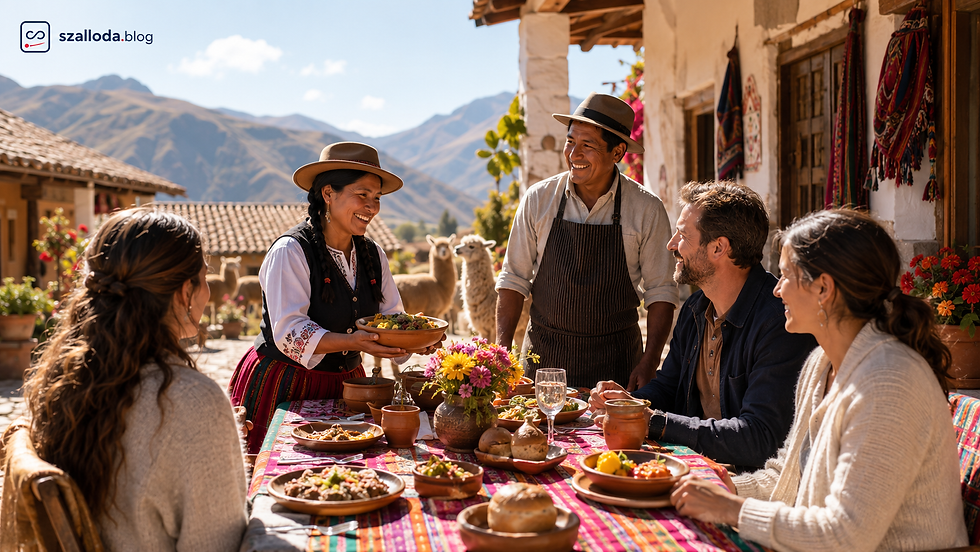
The types of providers also vary considerably. The network includes restored farmhouses, family wineries, boutique hotels converted from historic townhouses, lodges attached to nature reserves, accommodations on tea and coffee plantations, farm-to-table restaurants, wellness retreats, art centers, and wildlife viewing programs. Singular Places offers, for example, a Spanish family wine hotel, a Peruvian corn farm, an Ecuadorian Andean hacienda, an ecolodge attached to a tea plantation in Sri Lanka, a South African conservation lodge, and a bookstore-café in Uruguay.
The common denominator is not the size of the building, the star rating, the price level or the geographical location, but the local embeddedness. An Istrian gastronomic hotel, a South African lodge, a Spanish family winery and an accommodation connected to a tea plantation in Sri Lanka are seemingly completely different products, yet they are connected by the same idea: their operation and history cannot be separated from the region in which they were created.
The map also reflects Singular Places’ own professional network. The network was not established as a result of a country-by-country, representative tourism survey, but rather through hosts, regional ambassadors, former clients and professional recommendations, so where a strong local organizer or partner appears, a cluster involving new actors is more likely to form. The absence of a country does not necessarily mean that there are no suitable initiatives there, but often only that the personal and professional connection that could start networking has not yet been established.

There are also cultural reasons behind the geographical pattern
It is no coincidence that Singular Places is strongly present in countries and regions where the culture of family ownership, local gastronomy, regional identity and personal hospitality is still a living reality. In Spain, Portugal, Croatia or Slovenia, wine, olive oil, cheese, fishing, agricultural production, local cuisine and the use of historic buildings are not just tourist decorations, but part of everyday life and regional identity.
In these cultures, the host's personality often remains visible. The owner is not necessarily a distant investor, but is present in the house, knows the producers, has connections with the local restaurant, has chosen the furnishings himself, and can tell the guest why he set up his business there, in that particular way.
Slovenia is a particularly interesting example because the country's tourism policy consciously builds on smaller-scale, higher-added-value offerings, combined with regional gastronomy, active tourism and sustainability. In the previous analysis, Not More Tourists, But More Value, we showed that in Slovenia, not only traffic but also retained income, the quality of life of locals, the situation of smaller businesses and the environmental impact are considered part of tourism performance.
In Africa, a different cultural and market background supports the same model. A lodge operating near a national park cannot simply sell rooms, because guests travel there for the landscape, the wildlife, the knowledge of local guides, the connection with the surrounding villages and the full nature experience. Accommodation, nature conservation, the program, community relations and the employment of local workers are therefore already linked at the level of the business model.
In Latin America, family haciendas, wineries, agricultural cultures, indigenous traditions and extraordinary natural values create a similar foundation, while in South and Southeast Asia, tea and coffee plantations, village communities, wellness, spirituality, traditional medicinal knowledge and local crafts can be linked to hospitality.
From a market perspective, it is also significant that many service providers in these regions cannot and do not want to compete with international chains purely on the basis of size. The uniqueness, personality, history and local connections of a smaller family hotel, winery or rural restaurant can be the most important market advantage, but for this they need a common sales and communication system that makes them internationally visible without giving up their independence.

The market has also changed
Large hotel chains remain important, and for many guests, predictability, brand, points program, wide range of services and uniform standards mean security. However, in parallel, there has also emerged a solvent demand that seeks a more personal, less standardized and smaller-scale experience.
These guests don't necessarily forgo comfort or luxury, but they increasingly identify value less with the size of the building, the marble, the length of the buffet table or the number of pools. What matters to them is the story, the design, the regional food, the personal touch, the environmental responsibility and the feeling that the place they are visiting could not have been created in the same form anywhere else.
This market change also explains why many professionals familiar with the world of large chains have turned back to more familiar, independent accommodations. Not because large hotel systems are necessarily bad, but because they have realized that a professional background and individual character are not mutually exclusive.
Sabine Möller and the combined power of independent hotels
Another professional role model of mine is Sabine Möller, with whom I also had the opportunity to work. Sabine came from the sales and marketing world of larger hotel systems, and as the dreamer and founding CEO of City Partner Hotels, later CPH Hotels, she created a partnership based on the joint sales, marketing and professional support of individual hotels operating in private and family ownership. She also took on a decisive leadership role in the work of HSMA Deutschland.
One of the key insights of Sabine's model was that independence and collaboration are not mutually exclusive. A family-run hotel does not have to give up its name, character, ownership culture, or personal hospitality to gain access to shared marketing, sales, technology, and expertise.
The story of Lars and Sabine resonates with me. Both are familiar with the operational discipline and power of large hotel systems, yet they have found their way back to those properties where the personality of the owner or host is not lost behind standards and corporate processes. The goal is not to give up professionalism, but to ensure that collaboration does not standardize, but rather strengthens uniqueness.

When I understood what hospitality means in Tbilisi
What hospitality really means to me, and when I decided that I wanted to be useful in the world of hospitality, can be traced back much earlier, to the mid-1990s. I was a guest of Ramaz and Natasha Chkhikvadze at Villa Berika in Tbilisi, when Georgia and the city itself were searching for their own identity again in the extremely difficult period following the collapse of the Soviet Union.
Ramaz Chkhikvadze was one of the most famous Georgian actors of the Soviet era, but Villa Berika did not simply feel like a celebrity-owned accommodation. Ramaz and his wife hosted guests at their own table, and meals were not an anonymous hotel service, but a natural part of the life of the house and the family. A contemporary account published in 1997 also highlighted that guests ate together, and this was a conscious part of the Georgian cultural experience that the owners wanted to convey.
Some of the rooms were furnished with tsarist furniture and works of art, while other rooms housed works by young Georgian talents, so the entire house functioned as a residence, family home, gallery, and intellectual meeting point. According to contemporary descriptions, the rooms were designed in different styles, and the furnishings included 19th-century furniture, porcelain, and paintings by Russian, Georgian, and Dutch artists.
In a city that was just getting to know itself, Villa Berika was a kind of cultural center and extended family, where we didn't just stay, but briefly became part of the environment that surrounded us. I was able to sleep in the room that I was told had been occupied by Yoko Ono not long before. This was of course a special story, but the real value of the experience was not the famous previous guest, but the naturalness with which the hosts welcomed the arrivals, sharing their table, their stories, their art and their connection to the city.
At Villa Berika, I truly understood that hospitality is not synonymous with luxury, the number of stars, the number of rooms, or a long list of services. What was decisive was that the furnishings, the food, the art, the history of the city, and the presence of the hosts were all part of the same authentic idea, so the guest experienced the stay not as a consumer, but as a participant in a story.
In fact, this is the feeling that Singular Places is trying to organize into a modern, internationally marketable system. Not every place can be Villa Berika, and not every host can be a world-famous artist, but behind every truly unique place there must be a person, a recognizable idea, and a story that cannot be separated from its environment.

There are suitable places in Hungary too
In Hungary, almost all the building blocks are available to create a similar model. We have characterful rural hotels and guesthouses, family restaurants, wineries, cheese and meat producers, artisan bakeries, pálinka distilleries, farmers' markets, national parks, tour guides, water and bicycle service providers, artists, craftsmen, and historical and cultural values.
Knowing the quality of the Hungarian offer, it is hardly questionable that many Hungarian accommodations, restaurants, wineries and other local service providers with character would have a place in the international community of Singular Places; the real challenge is rather whether we are able to organize them into a network that works with each other.
There are Stylish Rural Hotels, Stylish Rural Restaurants, FATOSZ, numerous wine routes, local producer communities, LEADER action groups, TDM organizations and civil initiatives. The lack is therefore not primarily to be found in the actors, but in the fact that they mostly operate in their own professional and institutional systems, parallel to each other.
Hotels are organized with hotels, restaurants with restaurants, wineries with wineries, village accommodation providers with village accommodation providers, while the guest is completely uninterested in which association or association each service provider is a member of. The tourist wants to know where to stay, where to eat well, what local products to try, what to see, how to get from one place to another, and how to book all of this simply, clearly and reliably, if possible.
One of the biggest problems in Hungarian tourism continues to be that we treat attractions, accommodation, hospitality, producers and transport as separate sectors. In the article “Public transport is one of Hungary’s largest, yet untapped tourism and economic reserves” , we showed that tourists do not see sectors, institutions and administrative borders, but a single travel experience that either simply works or it does not.
The same is reflected in the article Active tourism: the biggest missed opportunity of Hungarian tourism policy . The active tourist inherently thinks in terms of a chain of experiences, because he books accommodation, visits restaurants, buys local products, tastes wine, travels, and combines tours and cultural programs, so his spending is divided among many more actors than that of a guest staying at a single resort.
The Hungarian opportunity is not just another portal
A Hungarian Singular Places should not simply be another website listing unique accommodations and restaurants with beautiful photos. The system should ensure real business collaboration, shared booking, minimum quality, multilingual communication, mobility solutions, regional storytelling and transparent economic impact measurement.
The national organization could be responsible for brand, technology, international sales, content production, training and quality assurance, but the actual operation would need to take place in regional clusters. Each cluster would need a local ambassador or coordinator who knows the service providers personally, can build trust between them, and involves not only the best-known or best-connected businesses.
Tokaj–Zemplén and Bükk could be obvious pilot areas due to their wine, gastronomy, active tourism, cultural heritage and nature. Őrség and Vendvidék are close to the Singular Places ethos due to their small-scale hospitality, natural environment, local food, crafts and slow tourism, while Villány, Siklós, Pécs and Ormánság could together connect wine, urban culture, heritage, gastronomy and a rural area that is even less visible today.
The Balaton Uplands and the Káli Basin would also be suitable for the model, but there would not simply be a need to generate additional demand. Reducing seasonality, involving background settlements, spatially distributing visitor traffic, and protecting the quality of life of the local population would be at least as important a task as international marketing.
It would be worth considering lesser-known regions, because the real rural development role of the model would not necessarily be strongest where tourism demand is already high. For Szatmár-Bereg, Zselic, the Körösök region, the Ormánság or other regions with strong local values but poor tourism visibility, cooperation could represent not only a marketing tool, but also an economic organizing force.

Tourism develops a region when it creates connections
In Hungary, we still tend to identify rural development with investments. A guesthouse is renovated, a visitor center is built, a bicycle path is completed, a restaurant receives support, a farmers' market is established, but in many cases no real economic and sales relationship develops between these.
A new accommodation facility is not rural development in itself, even if it is built with significant support. It becomes an investment that strengthens the economy of the area if it employs local workers, buys from local producers, offers external restaurants and hosts, extends guests' stays, and generates revenue for other local businesses.
Singular Places’ regenerative thinking is particularly important in this regard. Sustainability asks how we can do less harm, while regeneration asks how we can leave things better than we found them. A tourism business therefore not only uses less energy and produces less waste, but also contributes to strengthening the local economy, nature, cultural heritage and community.
This thinking could also help to ensure that rural youth are not only provided with seasonal, low-value-added jobs. Tourism-related production, gastronomy, crafts, tour guiding, cultural programs, digital content creation and transportation could also create longer-term entrepreneurial and professional opportunities.
The state could help, but it could not appropriate it
The state, local governments, rural development institutions, LEADER action groups and even the Hungarian Tourism Agency could all play a role in establishing such a network. They could finance the technological system, training of service providers, joint international marketing, foreign language content, transport connections and initial product development.
However, the professional selection and operation of the network should not be guided by political, institutional or personal connections. If membership were to become yet another purchasable qualification, award or communication label, the initiative would quickly lose its credibility.
In Hungary, there is a particularly great danger of first establishing the organization, appointing the leaders, creating the logo, organizing the first conference and award ceremony, and only then starting to look for what kind of working content to fill it all with. This should happen in exactly the opposite way: first, some real, regional cooperation should be established, and then, building on their results and experiences, a national network could be developed.
Membership should not be about perfection, but about demonstrable commitment and improvement. Businesses should regularly demonstrate how much they use local suppliers, how many other regional businesses they involve in their guest journey, how they reduce their environmental impact, what working conditions they provide, and what community or environmental causes they support.
The missing element is a culture of collaboration
Singular Places is not remarkable because every member is perfect, all of its sustainability commitments can be automatically verified, or because the model could be transferred to Hungary without any changes. Its real value lies in its understanding that the uniqueness of a region is not born from a single spectacular investment, hotel or restaurant.
It requires special hosts, individual ideas, local and sustainable design, regional flavors, personal stories, and a collaborative culture in which actors do not fear each other's guests, but recognize that together they can create a stronger and more valuable destination.
There is no shortage of unique places in Hungary. We have characterful accommodations, good restaurants, wineries, producers, craftsmen, landscapes, cultural stories, and people who, from their own ideas and often with extraordinary perseverance, have created something truly special.
What is still missing is a system based on trust, co-selling and mutual economic interest that connects all of these without losing their uniqueness. The most important message of Singular Places is therefore not that we need another accommodation portal, but that unique places, regional flavours and special hosts can only become a real force for tourism and rural development with a shared spirit.
About the author:

Tamás Pakuts has been actively involved in aviation and tourism for almost 35 years, and in the hotel industry and catering for more than 25 years.
As a manager and consultant, he had insight into the operations of several airlines, as well as hotels, hotel chains, and shipping companies, successfully taking on a role in their operational management, crisis management, and development.
He is currently present in many countries around the world with his colleagues as an expert, consultant, and trainer in the hotel industry and aviation, and he and his colleagues are working on the development of numerous new, internationally noteworthy projects.


Comments