


Hospitality Reopens: How Do We Handle the Domestic Guest?


Reopening hospitality businesses creates a more difficult situation in many respects than remaining closed. It is no secret that coffee sales alone do not make the numbers work. Nor do lunch specials or promotional menus at many restaurants cover the rent, staff wages and taxes. Many venues built their business models around pre-pandemic customer volumes and average spend, making adaptation to the new circumstances extremely difficult.
These businesses may look around and see an almost full house, yet their total revenue is no greater than what a single large table used to generate. Of course, it sounds wonderful to say 'now we have time to talk to you', 'we are delighted that local residents have discovered us', or 'Hungarians finally have their favourite places back'. But unfortunately this does not change the fact that a great many hospitality businesses will close permanently, or at least undergo substantial transformation. Employees may bear the cost, because lower volumes can be handled by fewer people.
Quite simply, a business whose costs are X — the level on which its old strategy and business model were based — cannot remain viable in the medium term when its current revenue is below X.

We must accept that domestic customers have different spending habits, different circumstances and different financial resources. We ourselves tend to indulge more when on holiday, and hospitality operators in foreign tourist destinations are now experiencing the opposite effect. Instead of well-spending Hungarian travellers who leave after 30–60 minutes, two local residents may sit down over a coffee and occupy a table all afternoon.
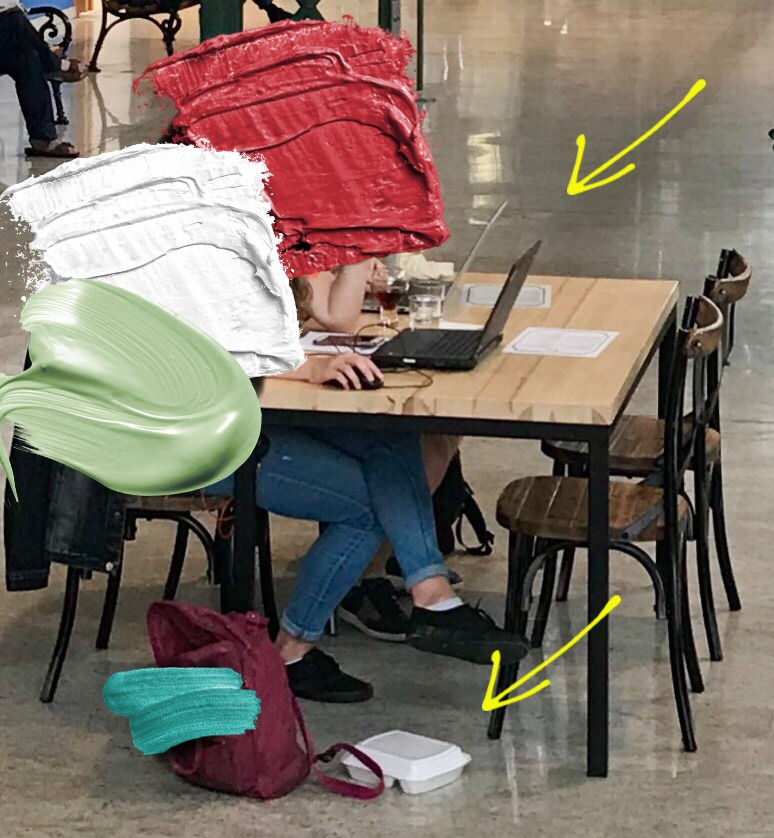
Now we Hungarians are no longer leaving considerable sums in another country; we are spending modest amounts at home instead.
The photograph is an illustration: at one of our largest tables, two people sit with two laptops and a single coffee between them. A table that should generate X forints per hour is therefore occupied for three hours in return for just 700 forints of gross revenue — and their lunch, brought from somewhere else, is waiting in a takeaway box for them to eat outside.
What is the solution? Should we abandon the nice-guy approach and ruthlessly put an end to situations like this? But the customer ordered a coffee — why shouldn't they be allowed to sit? Aren't we also a workplace or a shared office? Why shouldn't someone use a laptop; what would be different if they were reading a book?

Unfortunately, guests do not see — and cannot reasonably be expected to see — that this behaviour contributes to the decline of hospitality venues and a deterioration in average standards. Unless a business has 50–100 seats, charges 1,500 forints for a coffee and is backed by a giant multinational company, this model will become unsustainable within just a few months.
So what is the answer? For establishments that have always relied mainly or exclusively on local customers, little will change. Within a few weeks, perhaps months, their business may return to something like normal. Those that earned a substantial proportion of their revenue from tourists face much greater challenges. After all, we cannot expect someone who ordered a single coffee not to make themselves comfortable for the whole afternoon; in their position, we would probably do the same.

About the author:
Márton Lonkai
An economist by training and the founder-owner of Steamhouse Cafe. Winner of the Hungarian Brewers Cup in 2017.
This article was translated from the original Hungarian using artificial intelligence. The original language is Hungarian.


Comments